We have contact! Communicate productively, without stress, in any situation
I read this one. book for teenagers, which tells about how to find a common language with yourself, your family, friends, as well as learn to speak publicly, for example, at school. The book was written by two authors: Polina Mokhova and Ekaterina Zibrova, who shared ~~brotherly~~ There are four chapters between each other. The book contains illustrations by Christina Levy and looks more like a combination of lectures and a study notebook, in which everything is explained on fingers and accompanied by exercises to consolidate the theory. I read the book before giving it to one of my sons, which I found extremely useful, and if I had read it in school, it would have helped me a lot. Next on the contents
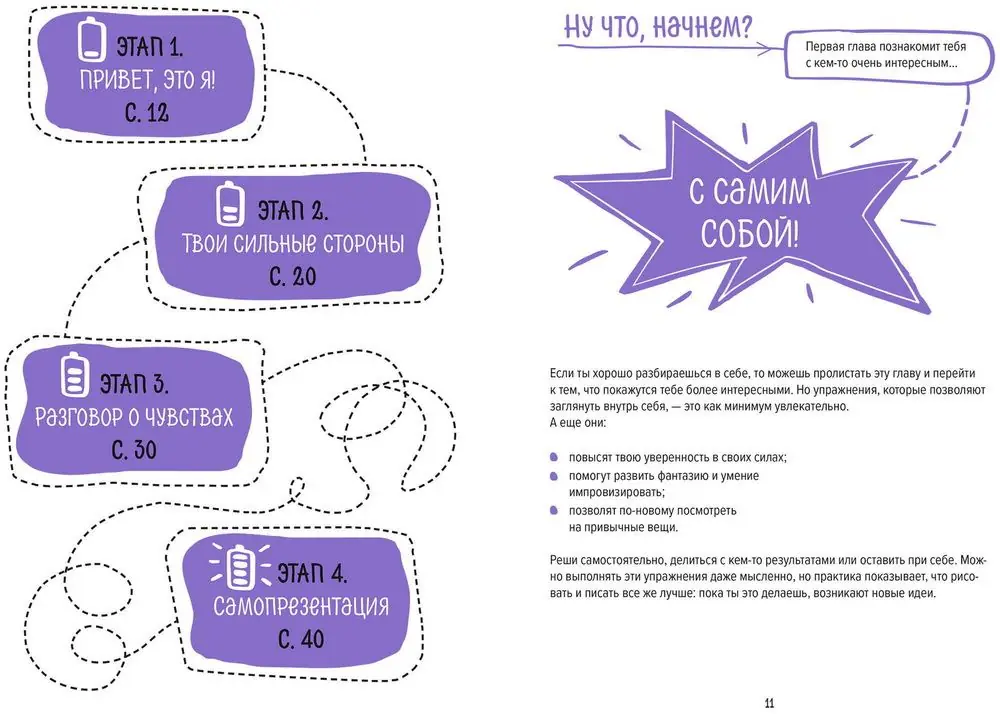
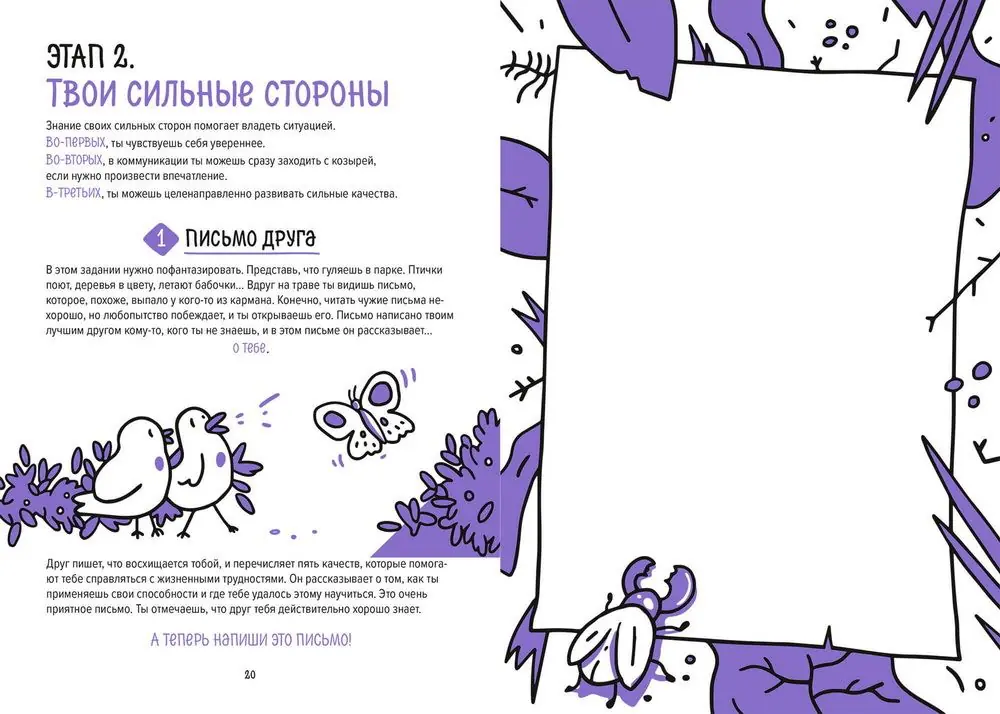
- Contact yourself Here's a reader. Get to know yourself and your name. Think about what is important to him and things that can say a lot about him. Thinking about your dark side. assess their strengths and qualities that characterize them
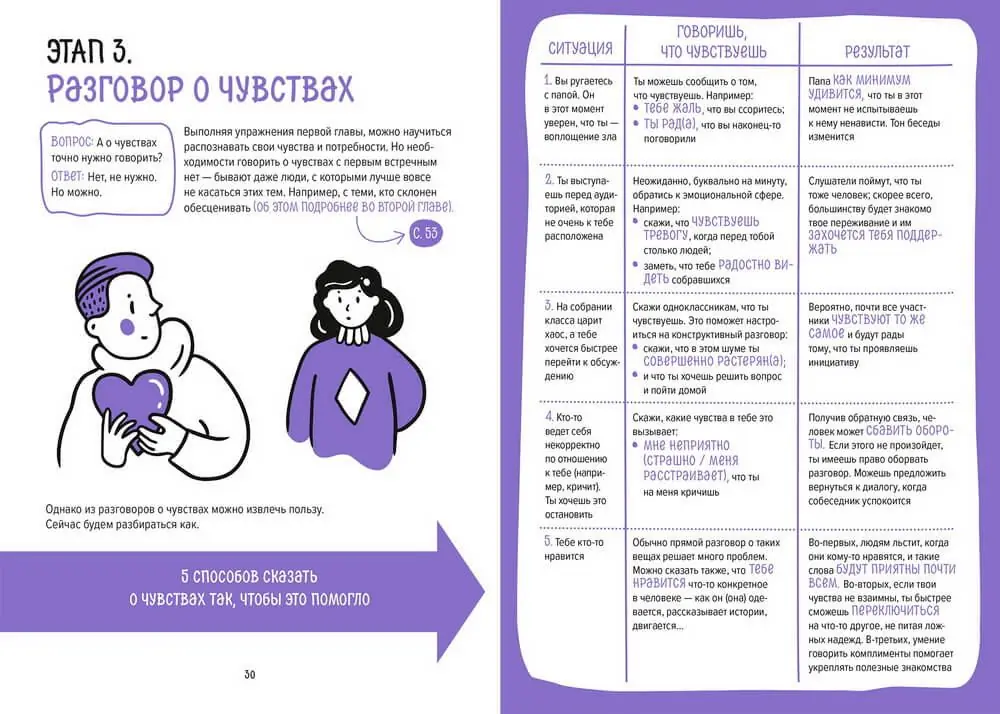
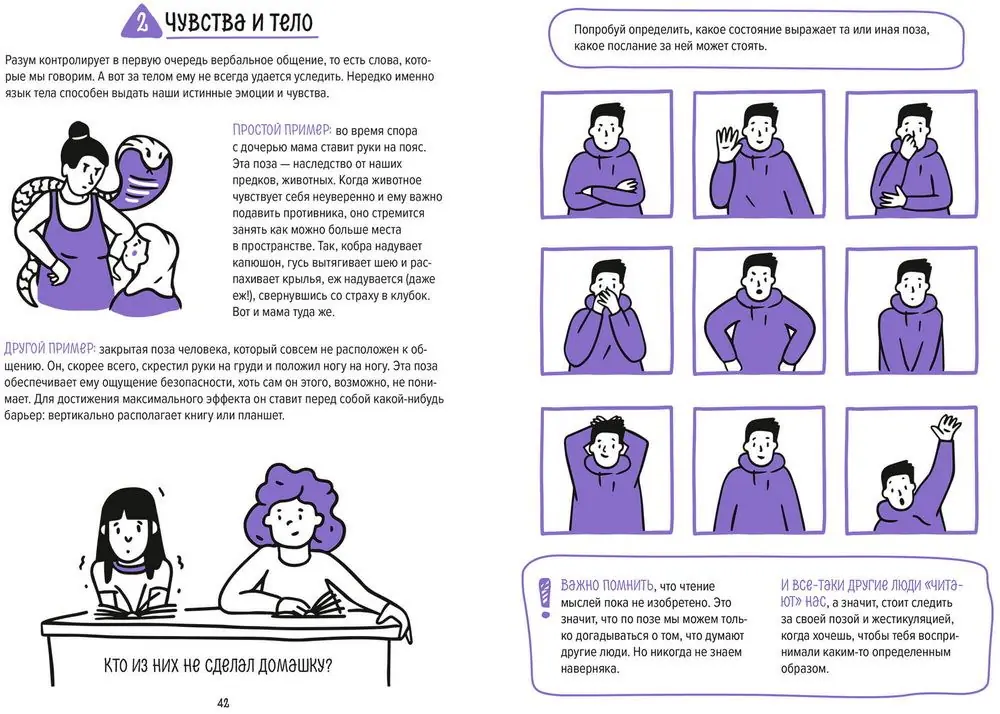
- learns to think and talk about feelings, to understand which feelings can be called his favorite and which are not Learning what to do when emotions overwhelm and how to deal with them Learn self-presentation and how the senses and body are connected, how our gestures betray emotions Studying how clothing affects perception and exploring your wardrobe to understand your clothing preferences
- goes through a whole group of challenges
Those who are always there Here the reader gets acquainted with his closest circle of communication, learns to find mutual understanding, explore the environment and conduct difficult conversations. Here the authors recall the pyramid of needs. (Maslow pyramid)They talk about conflicts as zones of growth, circles of intimacy, help to determine with whom from the nearest circle you can talk and what. In the relationship part, there is much talk about avoiding value judgments and replacing them with descriptions of why we have such an assessment. Next, the authors return to the question of feelings and talk about “you-saying” and “I-saying”, which helps to move from accusatory statements to neutral ones. A lot of time is spent discussing boundaries and why they are needed for comfortable communication. Next, it is proposed to think about their borders, as well as the observance of foreign borders. In the study of the environment, it is proposed to formulate goals and expectations from communicating with other people. (The book asks you to think about your relationship with your parents.). Then comes the transition to how to discuss complex issues and resolve unresolved conflicts. How to formulate your rights and responsibilities, as well as communicate with friends. What to do with manipulation, how to recognize it, and how to respond to manipulation attempts. How to support the interlocutor with active listening and how to recognize a toxic person, what is bullying and how to fight back.
Communicate in any situation This chapter reveals the secrets of successful communication: how to learn to start communication (icebreaker)What are the fears when communicating and how to overcome them, how to remember the names of interlocutors through analogies, how to observe safety when communicating with strangers. Next, the authors actively talk about active listening and how it helps with communication, because we have one mouth and two ears, which hints at the relationship between speaking and listening. In the final, the authors talk about the goals of communication and appropriate behavior, analyze on everyday examples of going to the store and traveling by train. The authors suggest to think about the scenario of communication and the fact that you need to be polite. The last part is devoted to online communication, but now advice from there has become the accepted norm.
In front of everyone. Here, the authors on their fingers explain the rules of public speaking, which includes parts of The purpose and idea of the performance, which depends on the audience to which we plan to talk presentation structure How to prepare for the performance itself How to work with audience questions This is a short but useful chapter on public speaking.
#ForKids #ForParents #SelfDevelopment