Artificial Intelligence in Comics (Introducing Artificial Intelligence: A Graphic Guide)
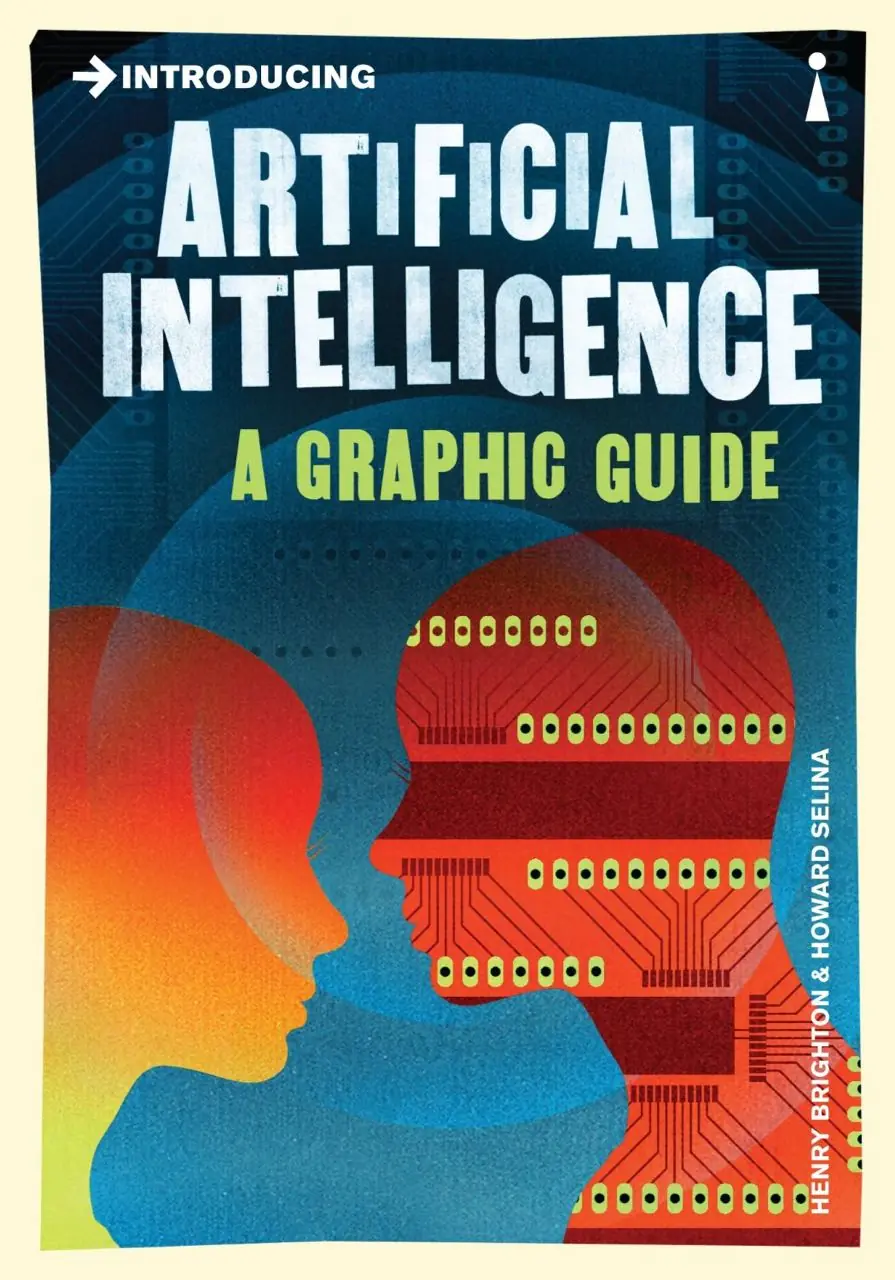
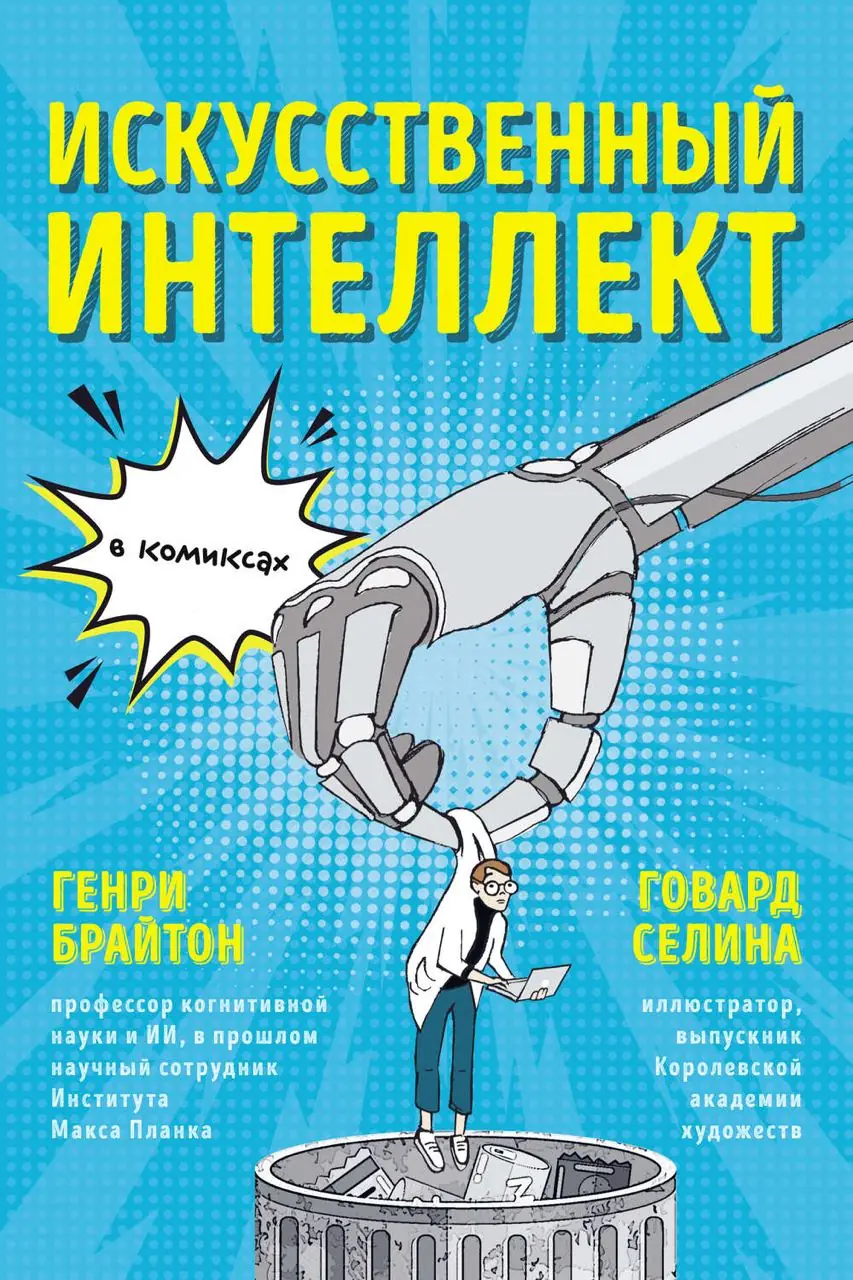
In this book, Henry Brighton makes a historical excursion into the development of artificial intelligence since the beginning of time. 2012 The year the book was published. The author recalls Psychologists who study thinking Philosophers who since ancient times pondered the connection of mind and body (Ontology is mentioned here.)
- Cybernetics. (Like Claude Shannon.) linguists (Like Noam Chomsky.)
- Turing with him. machine as a theoretical basic computing machine and a test for checking the presence of intelligence in a machine (really Imitation)
- Searle with his Chinese room thought experiment Roger Penrose: Quantum effects that may be significant for brain function (Here comes Gödel's incompleteness theorem.)
- Nematode with its full extension of the nervous system, for which they were awarded the Nobel Prize in 2002 year model of the modular basis of the mind and examples with games, when 1997 In the year he was defeated in chess Kasparov, and in 2016 year in Go - Lee Sedol Neural computing as an alternative to the standard symbolic approaches that have ruled the ball before Machine learning and its successes (on 2012 The year the book was published, the successes were even greater.) Biology and decision-making in organisms The principles of the new AI: 1) principle of implementation; 2) the principle of situationality; 3) bottom-up Behavioral robotics with examples of robots Moraveca and his predictions about the future of robots
- and the coming unification of the ways of old and new AI
P.S. Over the past ten years, AI has made A big leap forward in terms of weak AI, which is designed to solve practical problems
- and almost stood still in terms of strong AI (If you are guided by publicly available information)
On the history of AI, I recommend reading AI almanac #1Which I mean. already wrote.
#AI #PopularScience #Robotics #Software #Comics