Language construction. From Esperanto to Dothraki - Part II
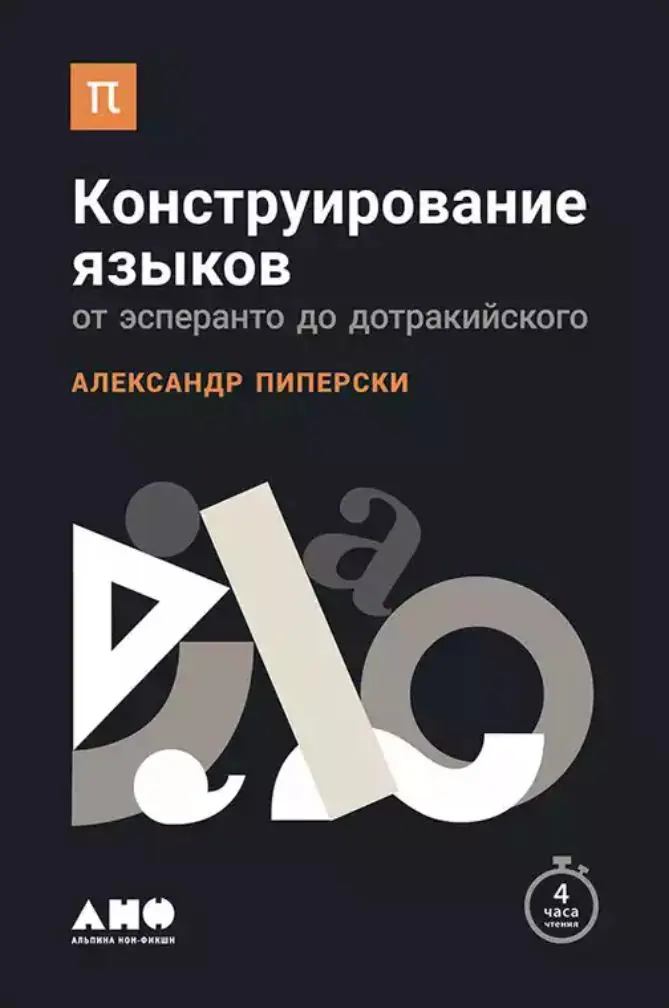
Continuation first-time book
6. Linguistics in scientific linguistics - here we understand the scenarios of the use of linguistic construction in science. For example, there is a reconstruction of languages based on already existing or dead languages, for example, the proto-Indo-Europeans, from which most of the languages of the Europeans and Slavs were obtained. Another example of using constructed languages is conducting linguistic experiments and determining patterns in the development of languages. This is usually a long process that scientists want to speed up. As a result, engineered languages can act as fruit flies for biologists – these can be quite simple languages, the development of which is easy to trace and derive certain patterns. In the end, the author devotes some time to semantics and shows how in natural languages explanatory dictionaries contain cycles in the definition of words, for example, in the dictionary of Ozhegov and Shvedova cycle definitions of three words: "place" - "space" - "intermediate". For this, the author recalls the semantic primitives of Anna Vezhbitskaya, which are about 55. These primitives can be used to define words without cycles, but they are similar to the Toki Pona language discussed in the first chapter.
In general, I found the book extremely interesting. It is cool that it has problems for linguistic construction, which allow you to test your understanding of the concepts outlined by the author. Well, I think that as a child, I lacked the touch of language learning, and this book opens the veil of this wonderful world:)
P.S. Here we go. snapper Alexander Pipersky, author of a book about Zadornov, linguistics and the construction of languages.
#SelfDevelopment #Writing #PopularScience