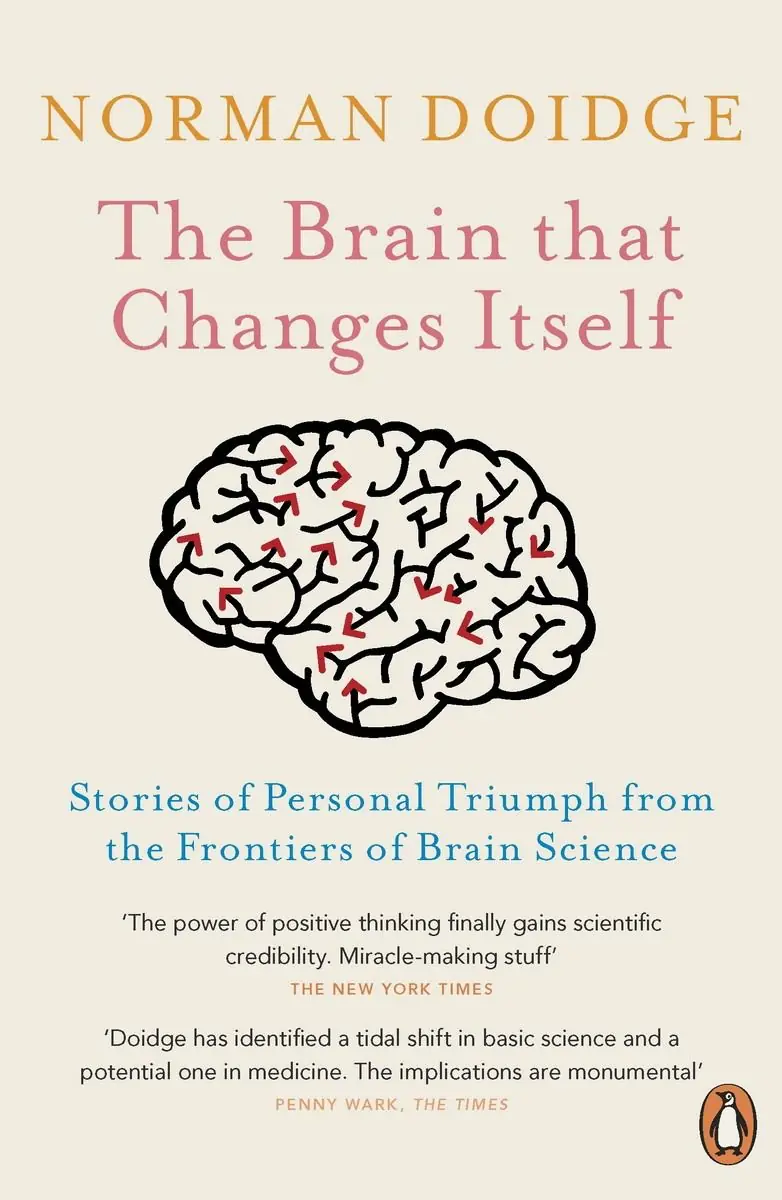
Brain plasticity (The Brain That Changes Itself)
The other day I finished reading a book by Norman Doidge, a Canadian psychiatrist and author of books and articles. In this book, the author discusses the concept of neuroplasticity of the brain, where the brain can change under the influence of experience, as well as recover from damage and build new connections that to some extent compensate for the consequences of such damage. Interestingly, the author goes through the history of specific scientists and patients who reversed the course of diseases using techniques using the concept of neuplasticity. Among these diseases were stroke, multiple sclerosis, autism spectrum disorders, and Parkinson's disease. In addition, the author talks about methods of increasing the level of intelligence, overcoming problems with learning and old age of the brain. Separately, the author tells stories related to a holistic approach to the study and development of the brain, and standard approaches for medicine are usually reductionist approaches, when the whole is divided into parts and parts are studied separately. The book really came out. 2007 It's been a long time since then, and brain science has moved forward.
From the title of the chapters, you can understand that the book consists of cool stories that can be read as life-affirming essays that are connected with the cross-cutting theme of our plastic brain. 1. A woman who was constantly falling ... It was saved by the man who discovered the plasticity of our senses. 2. How to Improve Your Brain. Woman considered mentally retarded, finds a way to heal herself 3. How to rebuild your brain. Scientist changes the brain: improving perception and memory, thinking speed 4. On tastes and preferences. How neuroplasticity affects our perceptions of sexual attraction and love 5. Return to life. Stroke victims learn to move and talk again 6. How to remove brain blockage. Use neuroplasticity to get rid of anxiety, obsessions, irresistible drives and bad habits 7. Pain. The flip side of plasticity 8. Imagination. How our thoughts work 9. Breaking up with the past. Psychoanalysis as a method of neuroplastic therapy 10. Rejuvenation.. Discovery of the Neural Stem Cell and Brain Preservation Lessons 11. More than the sum of parts. The story of a woman who became a living embodiment of the possibilities of neuroplasticity Annex 1. Culture and brain transformation. Not only does the brain define culture, but culture shapes the brain. Annex 2. Plasticity and the idea of progress
In general, I highly recommend reading this book - it gave me some ideas about why my brain works the way it does now, and how to make it work more efficiently:) And in parallel, I realized a little better that people around me can work a little differently and this should be taken into account when communicating, discussing issues and building arguments:)
#SelfDevelopment #Brain #PopularScience #Thinking