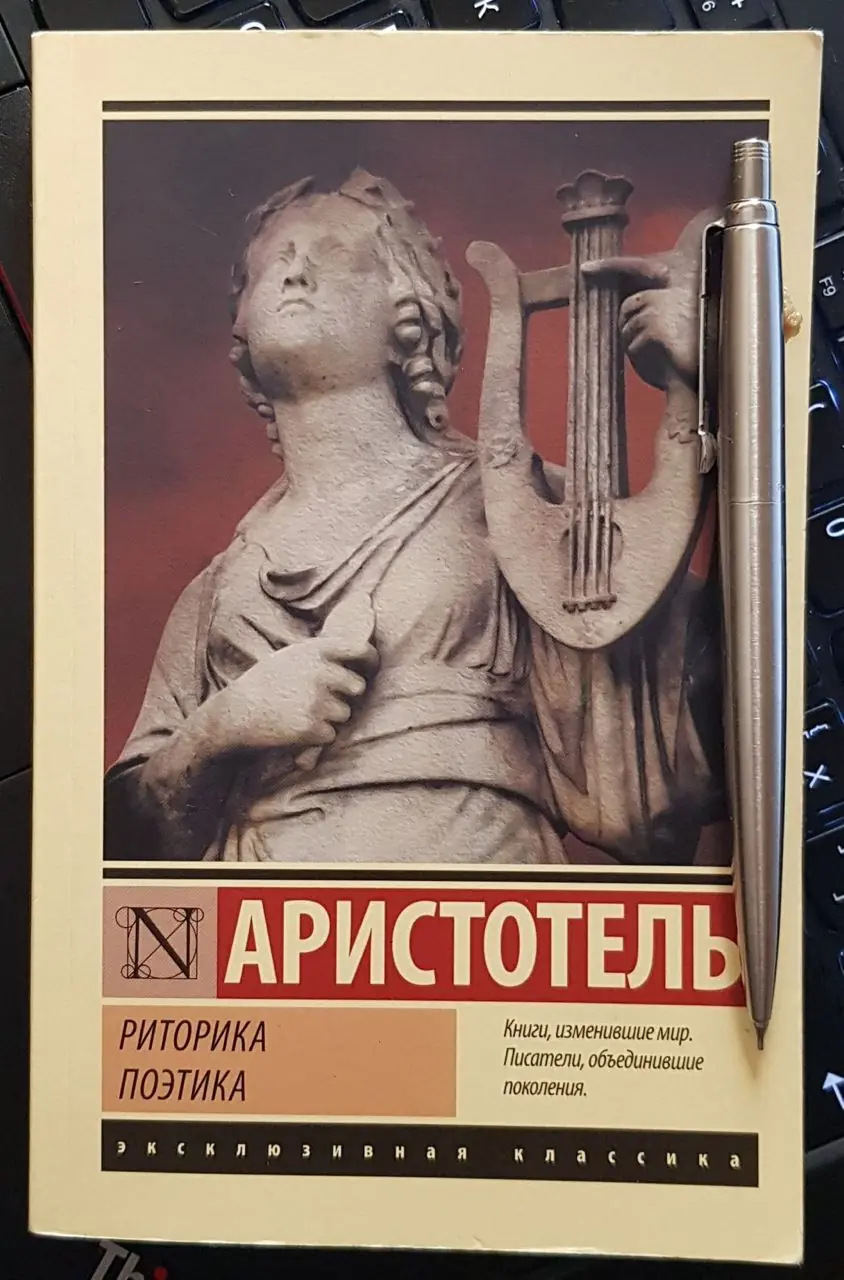
Rhetoric. Poetics ( PublicSpeaking)
I decided to continue the theme of my speeches and recall Aristotle’s classic work Rhetoric. Poetics" on public speaking:) One of the most striking achievements of Aristotle is the definition of syllogism: “Syllogism is speech, in which, if something is supposed, then something different from what is supposed necessarily follows from what is supposed.” Aristotelian syllogism consists of three propositions, two of which are premises, and the third is a conclusion. In Rhetoric, he uses this to explain how the speaker can prove his point. But Aristotle’s Rhetoric begins with a story about the nature of people and the nature of speeches, among which he distinguishes deliberative, judicial and epidictic speeches. For each type of speech, he talks about the purpose of these speeches and the techniques of conducting them. He goes on to discuss just and unjust actions. I am also interested in the list of types of non-technical evidence: law, witnesses, treaties, torture, oaths. (It seems that some of the points are not very relevant:)) Aristotle also talks about the purpose of oratory and how an orator can influence others using passions: anger, mercy, love, friendship, fear, shame, benefaction, compassion, resentment, envy, competition. Interesting is the change of passions in the life path of a person: youth, maturity, old age. Next, the use of evidence in their speeches: entimemes and syllogisms. Use the right style in your speeches. In general, if you have to speak often, then Aristotle’s Rhetoric is definitely worth reading:)
#PublicSpeaking #Presentations #Negotiation