The Grand Design (The ultimate design.) (Category PopularScience)
Today I decided to recall the book "The Highest Design" by Stephen Hawking and Leonard Mlodinov. I liked the book. In it, the authors discuss the issues of laws that control nature:
- What is the origin of these laws?
- Are there any exceptions to these laws, or miracles?
- Is there only one set of possible laws?
Then there is a discussion of what reality is, and there are references to the films The Matrix by the Wachowskis and The Truman Show. As a result, the authors conclude that there is no concept of reality that does not depend on the picture of the world, or on theory. They call this model-dependent realism, in which any physical theory or picture of the world is a model and set of rules that connect elements of that model with observations. And if each model corresponds to observations, then it is impossible to say which of the models is more real. Therefore, a more convenient model can be used.
A good model is a good model if it:
- simple (or "fine")
- contains few arbitrary or clarifying elements
- It is consistent with all existing observations and explains them.
- Provides detailed predictions of future observations that could disprove it if not confirmed Although grace is not easy to measure, it is highly prized among scientists because the laws of nature suggest the economic unification of particular cases into a simple formula.
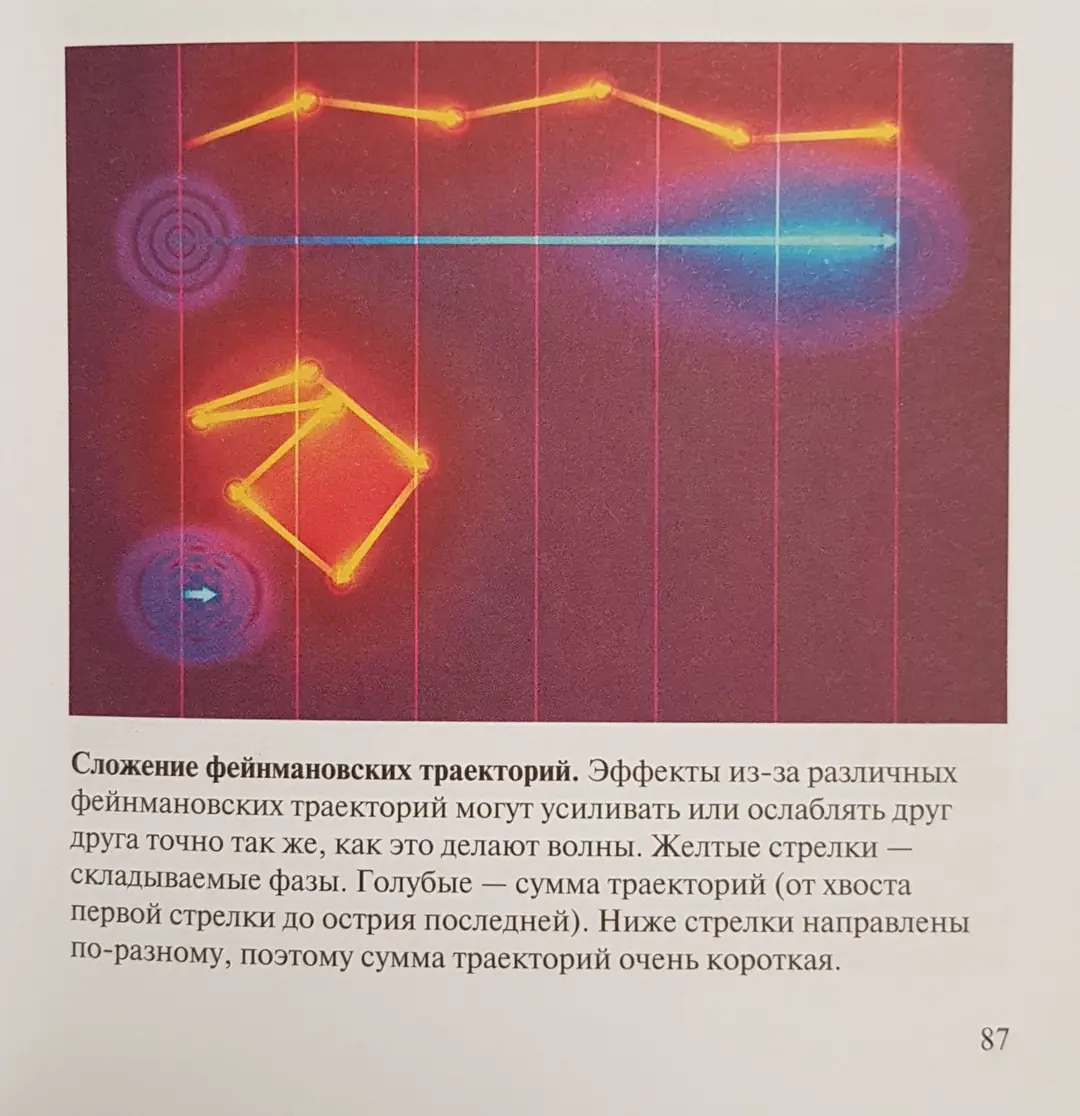
Further, the authors recall the quantum world and use Feynman’s formalism to discuss the concept of alternative histories: for any system, the probability of any observation is made up of all possible histories that could lead to a given observation. (By the way, I recommend reading Feynman’s book on this topic.QED: A strange theory of light and matter"). And this has important implications for understanding the concept of the “past” – according to quantum physics, the universe has no single past or single history. Next, the authors begin to move towards a theory of everything, listing for a start the known fundamental natural forces:
- gravity
- electromagnetism
- weak nuclear force
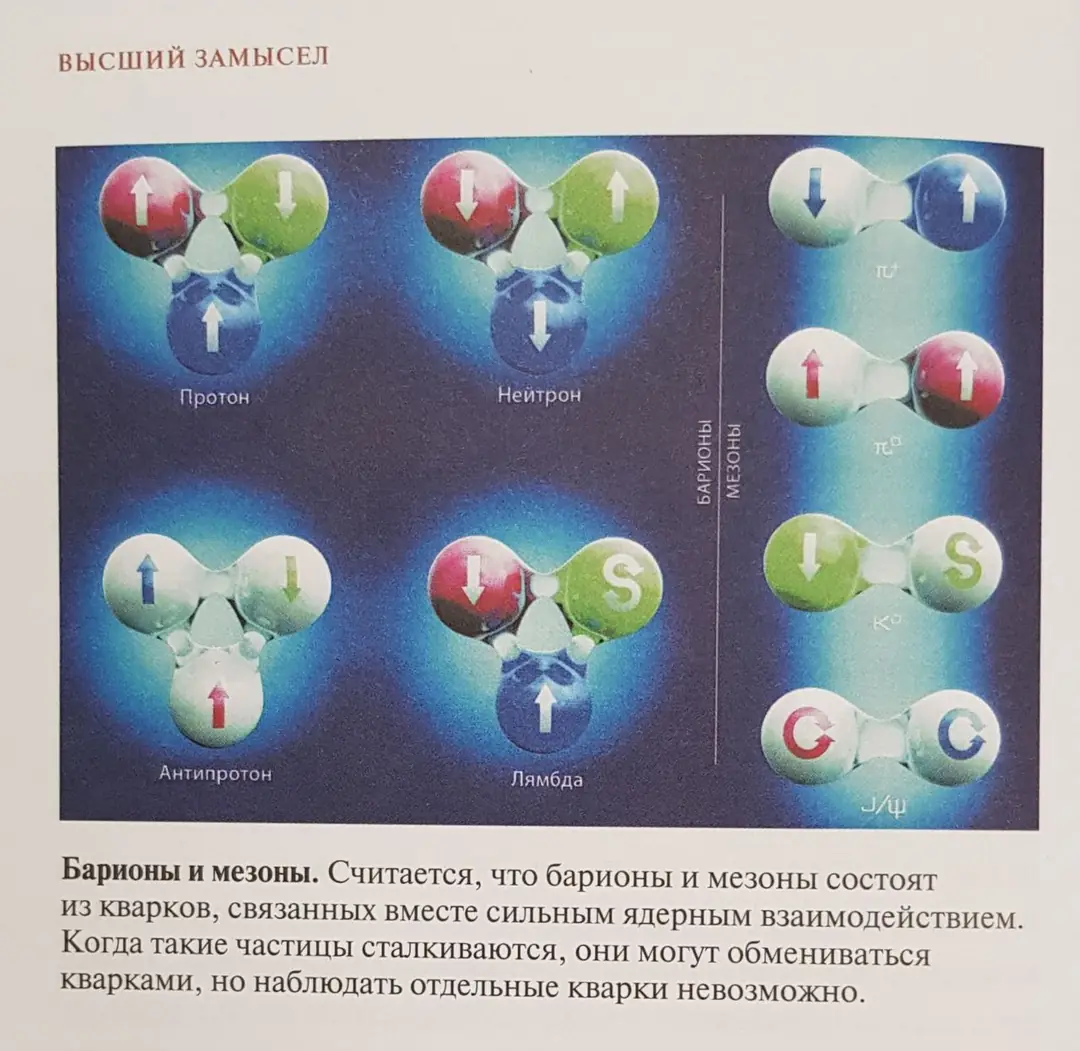
- strong nuclear force
Next, string theory and supergravity theory are mentioned, which are prerequisites for M-theory, which has the following properties:
- her 11 space-time
- M-theory can consider not only vibrating strings, but also other multidimensional objects called p-branes. (p-dimensional)
- variants of convolution of additional spaces determine the exact values of physical constants Interestingly, the laws of M-theory allow for different universes with different laws, which will be determined by how these extra spaces fold up. So the question is, how did we end up in a universe where these laws were enforced, if there's still an option? 10^500 variants of other laws. There is an answer to the question. 2 Anthropic principles:
- weak
- strong Weak says that the very fact of our existence limits the haacteristics of the environment in which we find ourselves. The strong anthropic principle suggests that the very fact of our existence imposes limitations not only on our environment, but also on the possible form and content of the laws of nature themselves.
The book concludes that M-theory is a general supersymmetric theory of gravity and the only candidate for a complete theory of the universe, and if it is finite, it will be a model of the universe capable of spontaneous emergence. And if the theory is confirmed, then we will unravel the Supreme Design.
#PopularScience #Physics