Corporate [Trans]formation: Strengthening a Business by Developing People
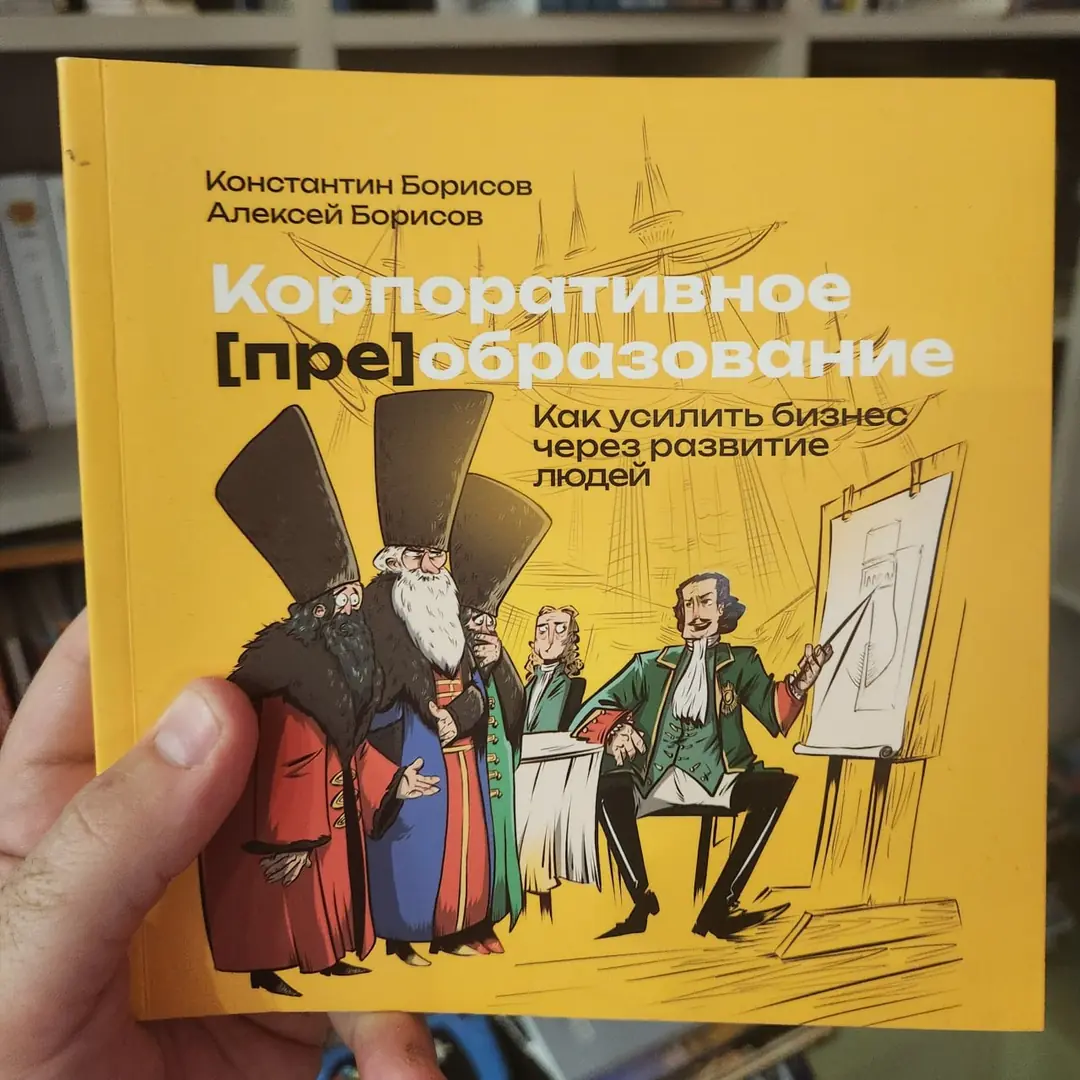
This is a beautifully put-together book, and while reading it I kept feeling that the authors were selling me their services. The Borisovs started in recruiting, then moved into custom corporate training and building learning systems for large companies. That experience shows in the way the book is organized.
They begin with the whole people cycle: recruitment, onboarding, performance management, career planning, learning, and engagement. They map it all onto a management maturity scale that runs from red through amber to green. You get a clear map for looking at your own company and finding areas to improve. It also leads neatly into a conversation with a consultant: here's where you're red, let's talk about getting you to green.
The second half focuses on employee learning, why it's needed, and how to organize it. The authors distinguish four levels: individual contributors, managers, managers of managers, and executives. The purpose of the learning changes substantially as you move up.
At the start, you teach people how to do the job. Then they have to manage people and other managers. For executives, broadening their perspective, getting familiar with conceptual approaches, and understanding other parts of the business become more important. So do getting to know one another inside the organization and working together on cross-functional projects. You can put strong leaders in charge of individual functions, and they still have to learn to work together.
There's a clear connection here to the MBA programs I've written about. In the INSEAD + Tinkoff program, we covered innovation, digital strategy, and people management. That list already shows how broad this kind of learning is: processes and culture, platforms, ecosystems, business models, and leadership.
In the Tinkoff + Skolkovo program, the organizational behavior module looked at the organization at three levels: individual, team, and company. That change of scale fits the book well. What people need to learn depends on what they're responsible for and whom they need to reach agreement with.
You can read the book as an overview of how HR processes connect with developing people. It's especially useful if you manage people and want to understand why companies need different learning formats, and why one program for every level is unlikely to do the job. I still came away feeling it was a polished pitch for consulting, and that's worth keeping in mind while reading.
#Books #Management #Leadership #HR #MBA #SelfDevelopment