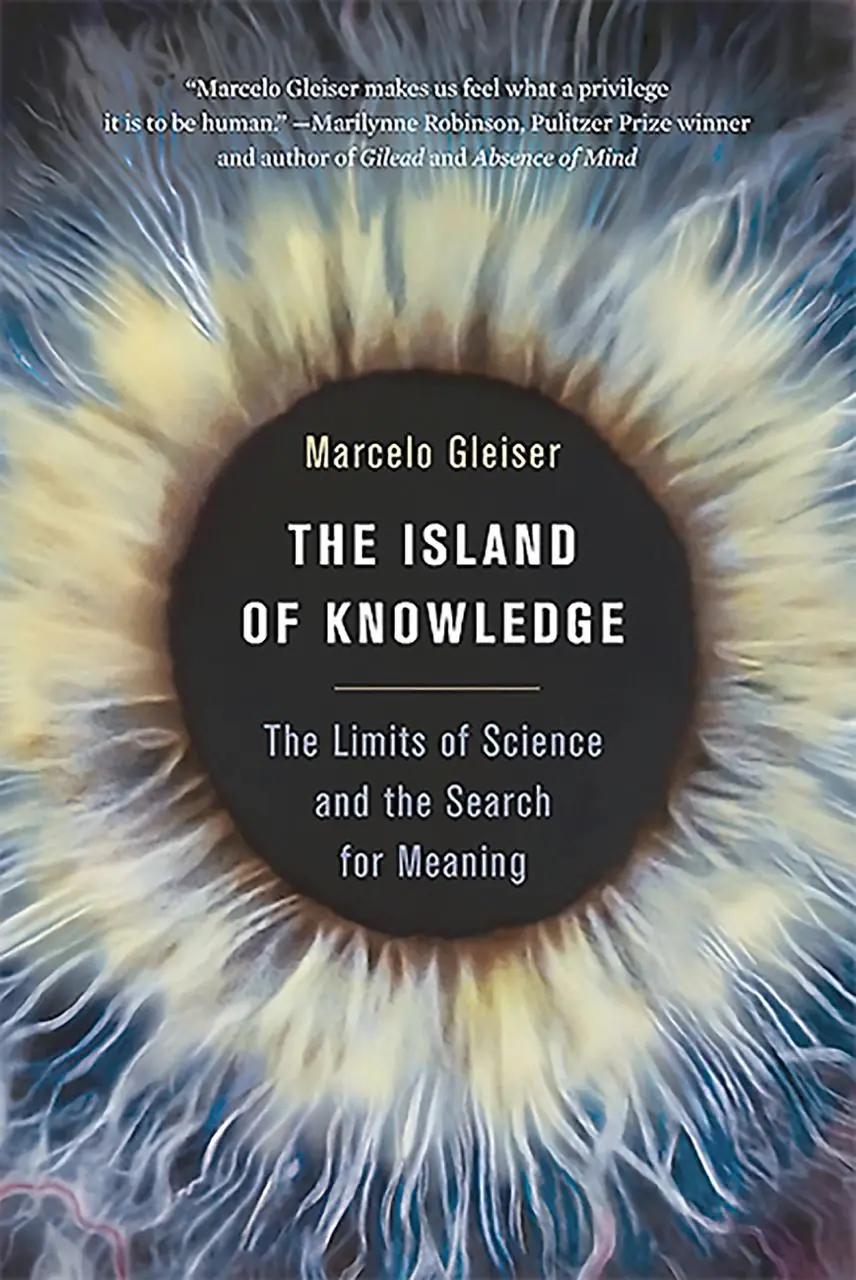
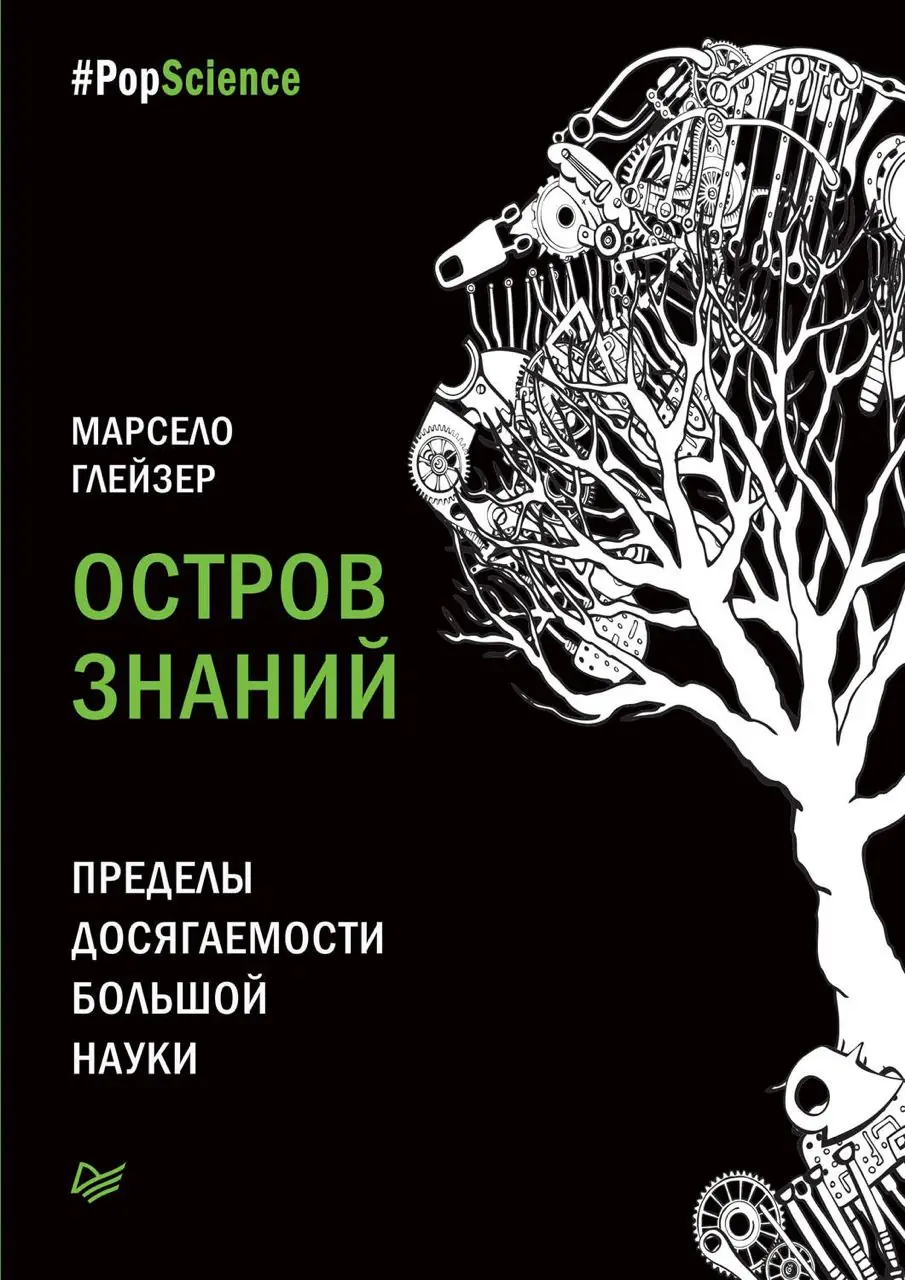
Knowledge Island. The Limits of Big Science (The Island of Knowledge. The Limits of Science and the Search for Meaning))
Today I decided to continue to remember the sciencepop and decided to write about the book by Marcelo Glaser, which I liked at the time:) The author has arranged the contents in the form of a timeline of the development of science from ancient times to the present moment and specifically to quantum physics:)
The whole first part is called "The Origin and Nature of Paradise." It looks like a kaleidoscope. It all began with the rhythm of natural phenomena, which ancient people deified in order to explain these phenomena and reassure themselves. In the future, science was significantly advanced by representatives of philosophical trends in Greece, which, for example, proposed the concept of atoms:) Further transformations accelerated with the advent of improved instruments for observing the starry sky - and Brahe, Kepler and Galileo came to the scene. Then came Newton and his laws, which perfectly explained the motion of the planets.
- Then Maxwell came with his laws for electromagnetism.
- Then there was Einstein with his special theory of relativity, then the general theory of relativity, and then the era of quantum physics came and this is a separate story, which is devoted to the second part. . Part part 2 From alchemy to quantum physics: the elusive nature of reality. And it starts again with a historical retrospective, and we go back to the history of transformation research. This time, we go through all these stages much faster and find ourselves in 20 We encounter Heisenberg’s uncertainty principle, Schrödinger’s cat, and other interesting effects related to the probabilistic description of reality. Next, the author takes us through various interpretations of quantum physics, starting with Copenhagen and moving on to more interesting ones:)
The book ends. Part Three: Consciousness and MeaningThe author links the uncertainty of quantum physics to the incompleteness of mathematics as a formal system. (more at Gödel's) and human consciousness. In the same part, there are references to the possibility that we are all living in a simulation, and to Seth Lloyd’s book Programming the Universe, which I have already written. once wrote.
The end of the book is motivating, and I especially like this paragraph from the last chapter of "Trafficking and Meaning": The hope that someday we will reach the ultimate fullness of knowledge is too naive. In order to move forward, science must make mistakes. We can strive for credibility, but we need doubt to grow further. We are surrounded by horizons and manifestations of incompleteness. All we see are the shadows on the cave wall. Boundaries are a stimulating factor. They tell us about the world, about our perceptions and about ourselves, while pushing us forward in the search for answers. We push the boundaries to better understand who we are. The same process we see in science (moving forward or retreating, but continual progress)It should happen to each of us in achieving our goals. When we fear taking the next step into the unknown, we stop growing.
#PopularScience #Physics