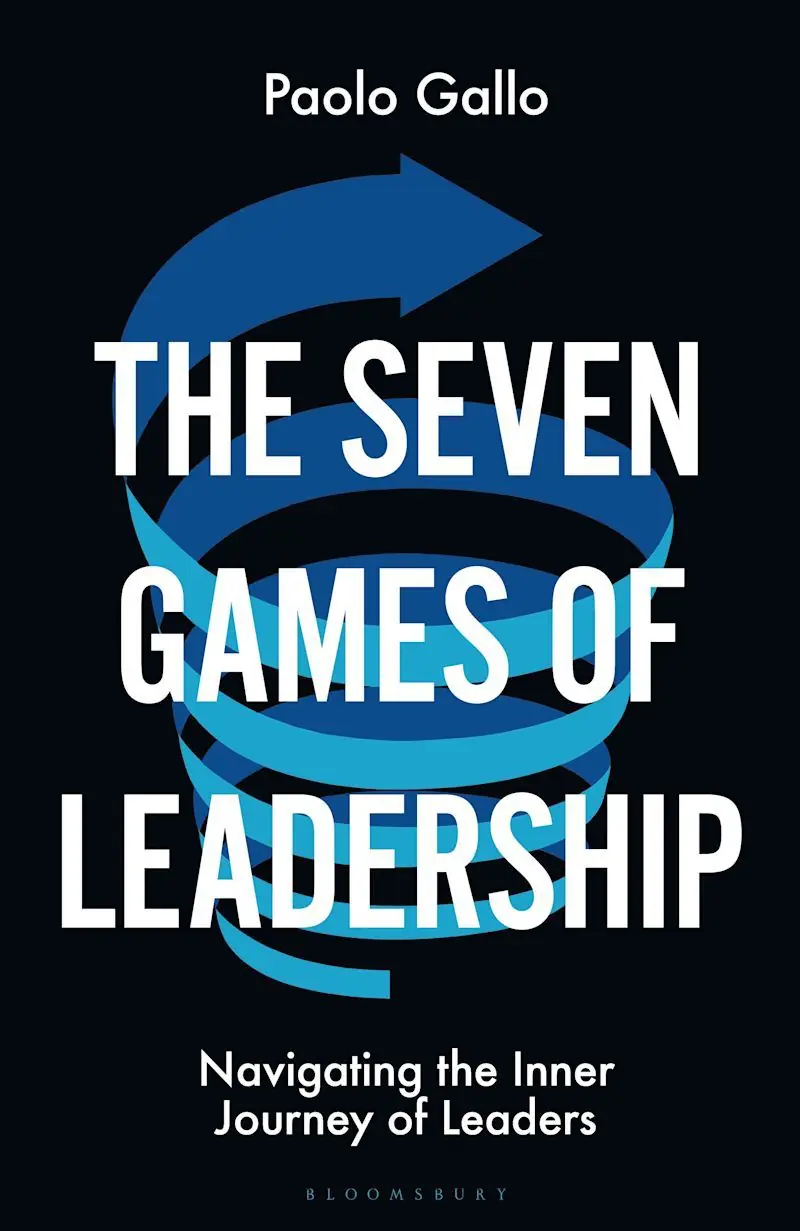
Paolo Gallo The Seven Games of Leadership Talks at Google
Interesting. video In the Talks at Google series, Paolo Gallo talks about his book, The Seven Games of Leadership: Navigating the Inner Journey of Leaders, published a month ago. He was Chief Human Resources Officer at the World Economic Forum in Geneva, was Chief Learning Officer at The World Bank in Washington, D.C., and Director of HR at the European Bank for Reconstruction and Development in London.
In the video, the author begins with the story that he wrote this book for his teenage daughter, who once asked him “What did you learn from your dad over the years of your career?” Then Paolo thought about it and in a week
I especially liked the following questions.
- First, evaluate your achievements from 1 before 10 And remember the number.
- Next, assess how much you have become the person you would like to become – here you also need to choose the number from the 1 before 10
- And then compare the two numbers - the author argues that most of these surveys show that the assessment of achievement always outweighs, and this tells us how people prioritize.
Then he talks about his model. 7 leader 1. Inner game An internal game in which a person tries to understand who he is, what motivates him, what he stands for and what he is good at. These questions seem obvious, but they are not. 2. Better game After a person understands what he is good at, he begins to try to do it as well as possible. This increases authority and skill in the game that the person has chosen for himself. It is important that a person has the determination to continue improving throughout life. 3. Caring & outer game At this stage, people stop thinking about themselves and others. (It's the caring part.) And then the person develops contextual intelligence and learns to connect dots and understand how megatrends affect his field of activity. (Changes in geopolitics, climate, technology, demography and so on). Here is the transformation and expansion of horizons and understanding of deep interrelations. 4. Crisis game There is a crisis here, and everyone has a +/- (usually 40 and 50 years). This usually raises the question “What will I do next” and may take several years to answer. This is a game in search of new meaning. 5. Reinvent game If meaning can be found, then the game begins with reinventing what motivates a person. 6. Revolution game These are changes that will benefit the people around you. This is such an altruistic view of the contribution of man to the improvement that man brought to the community, the city, the country. 7. Let go game Sometimes people consider themselves irreplaceable, but at this stage you need to be able to let go of this feeling. (Or as Louis said. 14 "The state is me."). Here the author explains that often people fix the moment to which they are ready to move, and then need to leave in time. It's a question of gaining wisdom.
The author builds these games in the form of an expanding spiral from the game number. 1 playtime 7 And what this means is that in the process, people gain experience, wisdom, and they grow in levels, and at each level, they get a greater understanding of what's going on.
I liked this model for its brevity and conciseness, as well as the fact that it suggests new ideas in terms of self-development. I wanted to buy a book and read it in its entirety:)
#SelfDevelopment #Leadership #Management