Why processes are back in the PMBOK Guide (Series #Management)
I’ve been a PMI-certified project manager for nine years now (PMI is the Project Management Institute). I spent the last couple of months renewing for another three years, which meant catching up on what had changed at PMI. Last time around, that led to a post about Disciplined Agile. This time, what caught my attention was the eighth edition of the PMBOK Guide, published in November 2025.
If you ever had to learn PMI’s processes, I have news for you. They’re back :) So where did they go?
The sixth edition (2017) had 49 processes across 10 knowledge areas. In the seventh (2021), PMI reorganized the book around 12 principles and 8 performance domains. The eighth edition keeps the principles and brings process descriptions back into the guide. That feels like a welcome return to basics :)
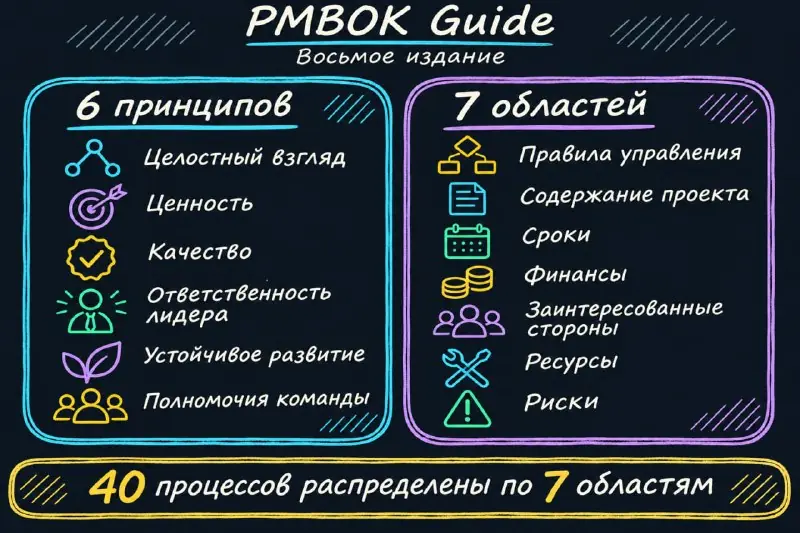
Six principles guide decisions about the project. The names are from the PMBOK Guide.
🔸 Adopt a Holistic View — look at the whole project and consider how a decision in one area will affect the others. 🔸 Focus on Value — set priorities according to the benefits the outcome will bring to the customer, users, and the organization. 🔸 Embed Quality Into Processes and Deliverables — agree on quality criteria up front and check that the work meets them as it progresses. 🔸 Be an Accountable Leader — explain your decisions, follow through on commitments, and take responsibility for the consequences. 🔸 Integrate Sustainability Within All Project Areas — consider the social, economic, and environmental effects of project decisions, including after the project ends. 🔸 Build an Empowered Culture — give the team authority to make decisions and support people when they take the initiative.
Seven performance domains cover what the team manages in practice.
🔸 Governance. Who has authority, how decisions are made, and how changes are approved. 🔸 Scope. Requirements for deliverables, the boundaries of the work, and acceptance criteria. 🔸 Schedule. The sequence and duration of activities, dependencies between them, and updates to the schedule. 🔸 Finance. Cost estimates, project funding, budgeting, and cost control. 🔸 Stakeholders. Identifying people who influence the project or feel its effects, understanding their expectations, and acting on their feedback. 🔸 Resources. Assembling the team, planning its workload, and securing materials and equipment. 🔸 Risk. Identifying threats and opportunities, assessing their likelihood and impact, and choosing how to respond.
The 40 returning processes are spread across those seven domains. I like how these chapters are put together. The processes are followed by advice on tailoring them to your project, and each chapter ends with a Check Results section. In the schedule chapter, that prompts a very practical question. How much faith can we still put in the finish date on our plan?
Incidentally, the table of contents now lists three appendices side by side on project management offices, AI, and procurement. Procurement has the clearest starting point, if you ask me. Before choosing a supplier, it’s worth asking whether you need to buy the thing at all or could build it more easily yourselves.
P.S. I was able to renew because I’d already moved to London. While I was in Russia, I couldn’t pay for anything on the PMI website, including the renewal. It came down to the country linked to my account, regardless of my VPN :(
#Management #Project #Agile #Processes #SelfDevelopment