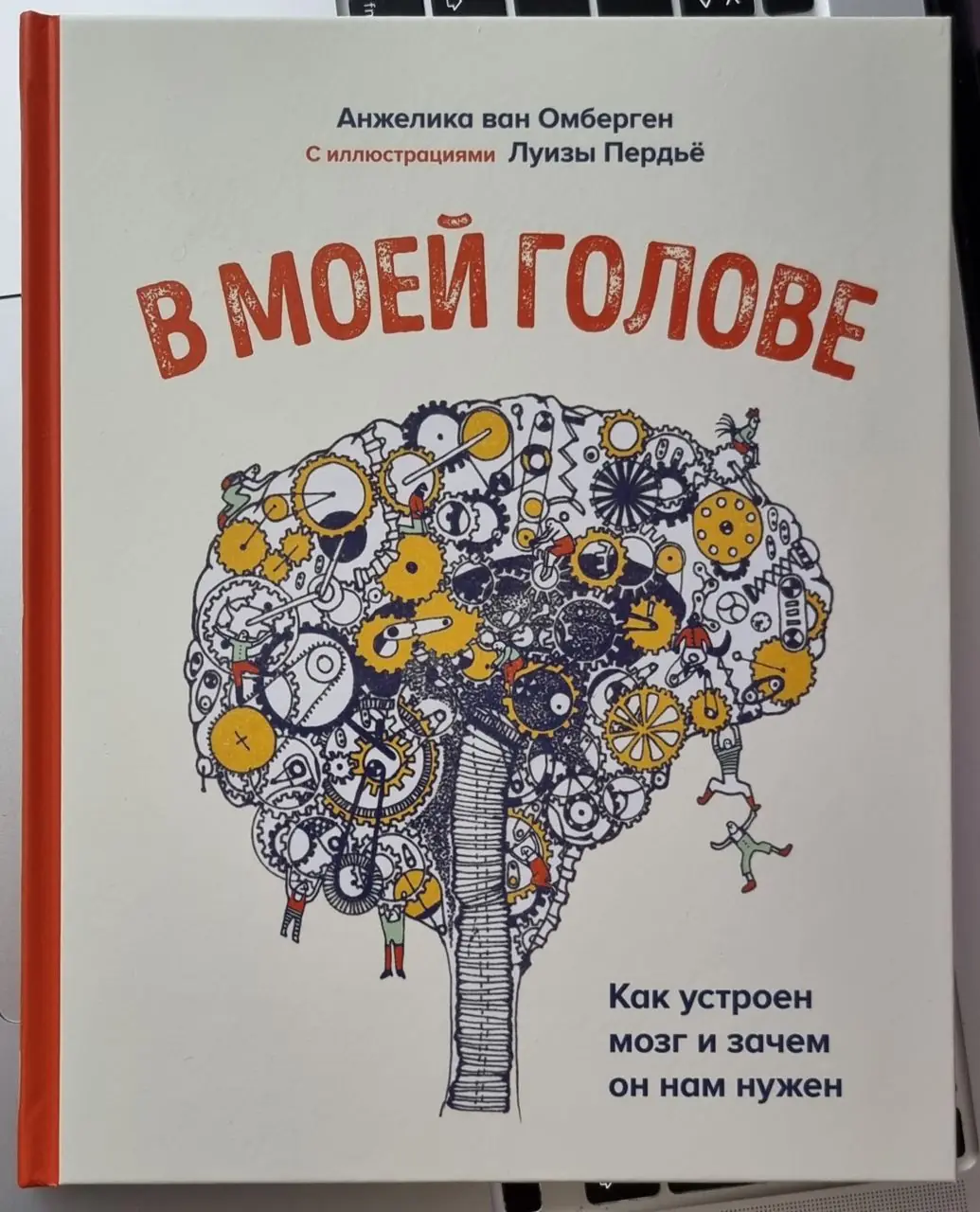
In one day I swallowed Angelica van Ombergen’s book In My Head, which was accompanied by ironic illustrations by Louise Perdier.
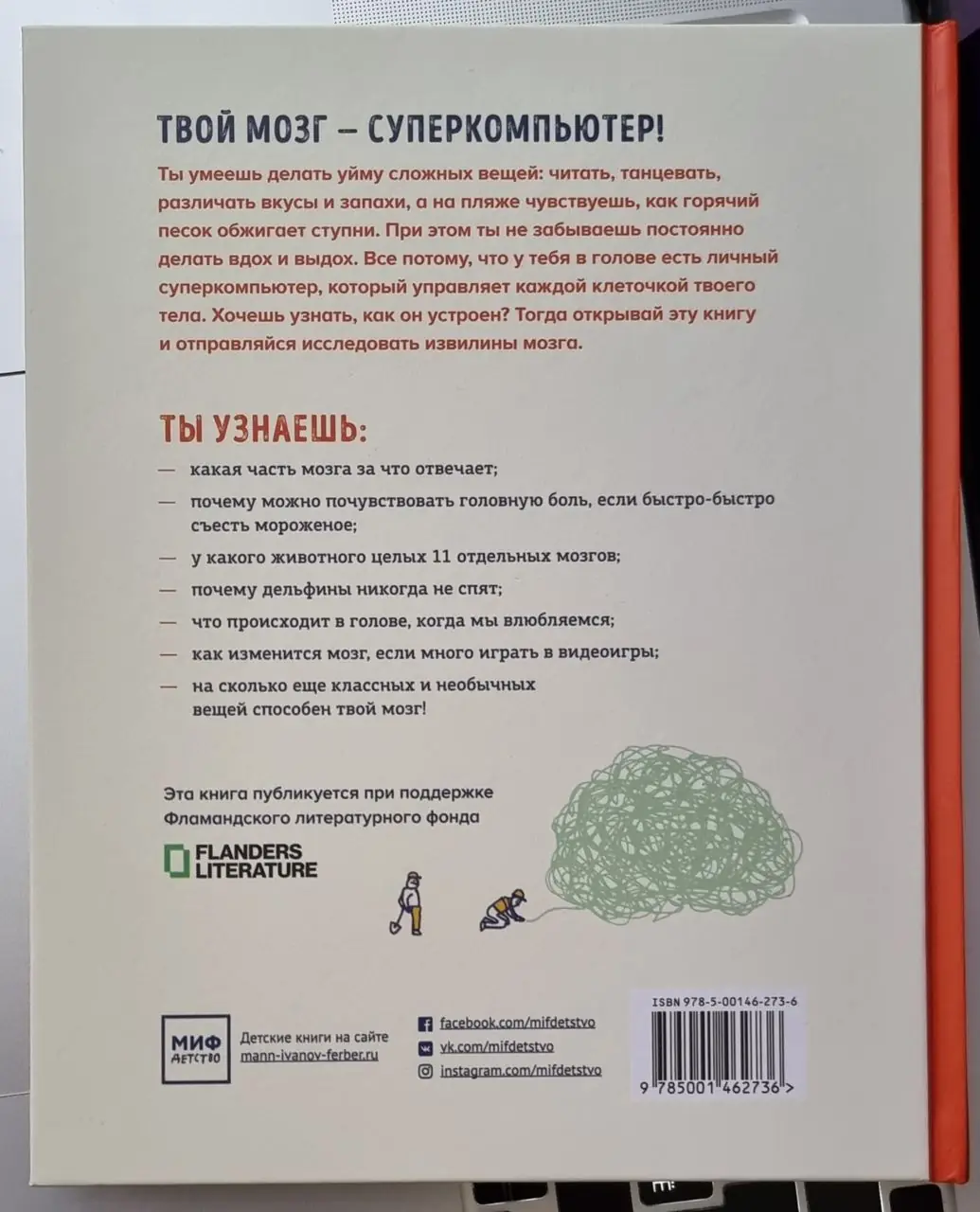
In one day I swallowed Angelica van Ombergen’s book In My Head, which was accompanied by ironic illustrations by Louise Perdier. This book is published by MYTH in the series Childhood and tells on the fingers how the brain works and allows the student to capture the main points. It is interesting that the book does not consist of chapters, but of convolutions, each of which is devoted to its own topic and which is all about it. 11. Here they are in order of priority.
- Immerse yourself in the amazing world of the brain - a brief summary of what the brain consists of, what areas it has, how signals propagate.
- The brain takes selfies, a story about how people explored the brain from ancient times to modern methods like CT or MRI.
- Brain Factory - a story about the left and right hemispheres, the callosum body and the lobes of which the brain consists: frontal, parietal, temporal and occipital
- Gray cells in the animal world - about various options for organizing the brain from a snail to a sperm whale
- We hear, we see, we smell... with the brain. 5 (more) sense organs and nerves that allow the brain to receive and send signals
- Sensitive strings of soul (Or a brain?) Emotions and the limbic system, from fear to love
- Growing up the brain: from the womb to old age - about brain changes and why teenagers find it difficult to cope with emotions
- Plastic brain: memory and learning - about short-term and long-term memory, about the unconscious and reflexes, about the adjustment of the brain when learning new or local problems
- Failure in the system - about disorders associated with impaired brain function: autism, ADHD, epilepsy, depression, dyslexia and at the end about the formation of addictions
- "Hr-r-r!" - from consciousness to terrible nightmares - about how the brain sleeps and why it needs it
- The brain of the future - about modern brain research from AI to neuroimplantants such as neuralin k
In general, the book is good for both children and adults who are interested in how their brains work:)
#PopularScience #Brain #ForKids