Pragmatic programmer (The Pragmatic Programmer)
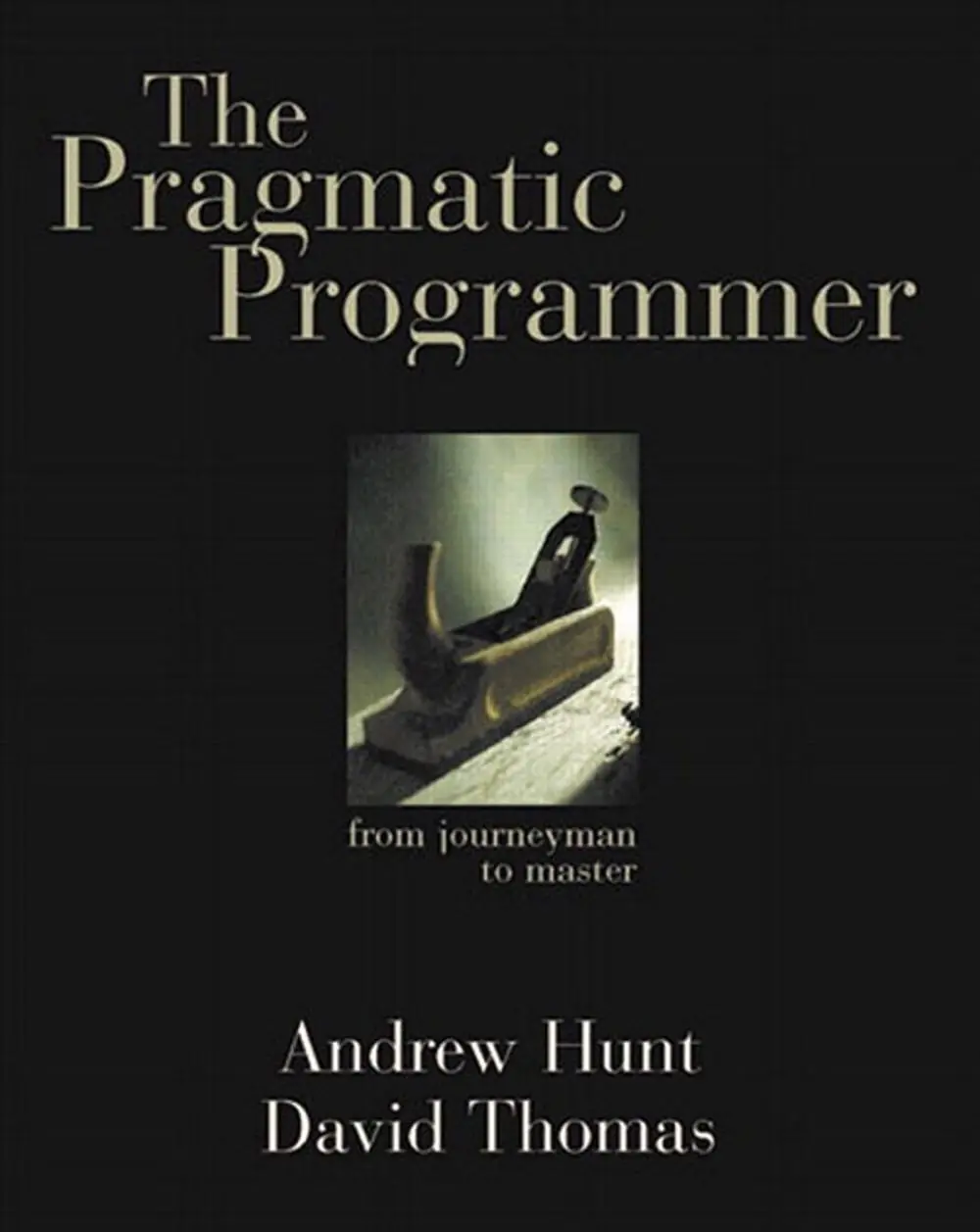
On this New Year's holiday, I took a book with me. 25It was written by Andrew Hunt and Dave Thomas. She went out in the distance. 1999 The year was devoted to software development and included a bunch of pragmatic tips to improve the development processes and their skills as a programmer. This book was very popular at the time, so 2019 The second edition was published, and the authors told about it in Goto Conference Book Club. By the way, recently I wrote about the performanceOne Rule to Rule Them Allby Dave Thomas, who is one of the authors of this book.
If you go back to the old edition of the book, then in my paper book there are a lot of notes and underlines, which I now remember when I re-read:) But today I wanted to talk about the first chapter of Pragmatic Philosophy, in which the authors set the tone for the story. The chapter consists of 6 parts
1) My original cat ate the Murzik cat. The authors talk about the importance of accepting responsibility, as well as the importance of showing solutions to the problem, rather than sculpting excuses.
2) Entropy in programs Authors recall second law of thermodynamics
In an isolated system, entropy either remains unchanged or increases. (non-equilibrium)maximizing thermodynamic equilibrium (law of entropy). And they say that your program also obeys this law, so you need to spend energy and energy to keep it in shape:) The authors immediately recall the criminal broken-window theory If one glass is broken in a building and no one replaces it, then after a while there will not be a single whole window in this building. The windows should be changed in time:)
3) Stone soup and cooked frogs Here, the authors recall the fairy tale-analogue “Axe Soup” and the common misconception about cooking frogs on a slow fire. In fact, the authors propose to be the catalyst of change, as well as to monitor the changes that occur around.
4) Acceptable programmes It’s about how to goog enough, but no better.) To do this, you need to understand what exactly users need, as well as know the measure and not go into perfectionism.
5) Knowledge portfolio Here, the authors talk a lot about self-development and how to approach it as a portfolio investment. Regularity and turning self-development into a habit are important. Learn different topics rather than focusing on the same technology It is important to understand that investments in different topics are accompanied by different levels of risk - the latest js framework can be a blank, and algorithms and patterns are useful almost always. If you manage to catch the trend before moving to HYIP, then investments can pay off many times. Sometimes you need to rebalance your knowledge portfolio and throw something out and add something.
6) Communicate. This part is about the importance of communication. Authors offer pragmatic advice
- Know what you want to say.
- Know your audience.
- Choose the right moment. Choose a style - you need to choose the approach to communication that will suit the audience Meet on clothes - how your thoughts are designed is important
- Attract your audience - you can work collaboratively on the document
- You can listen.
- Talk to the people.
The chapter on pragmatic philosophy ends there, but the book goes on and is full of interesting and instructive stories and tips on how to become better not only in programming, but also in other areas:)
#SelfDevelopment #Engineering #Software #SoftwareDevelopment #Management #Leadership