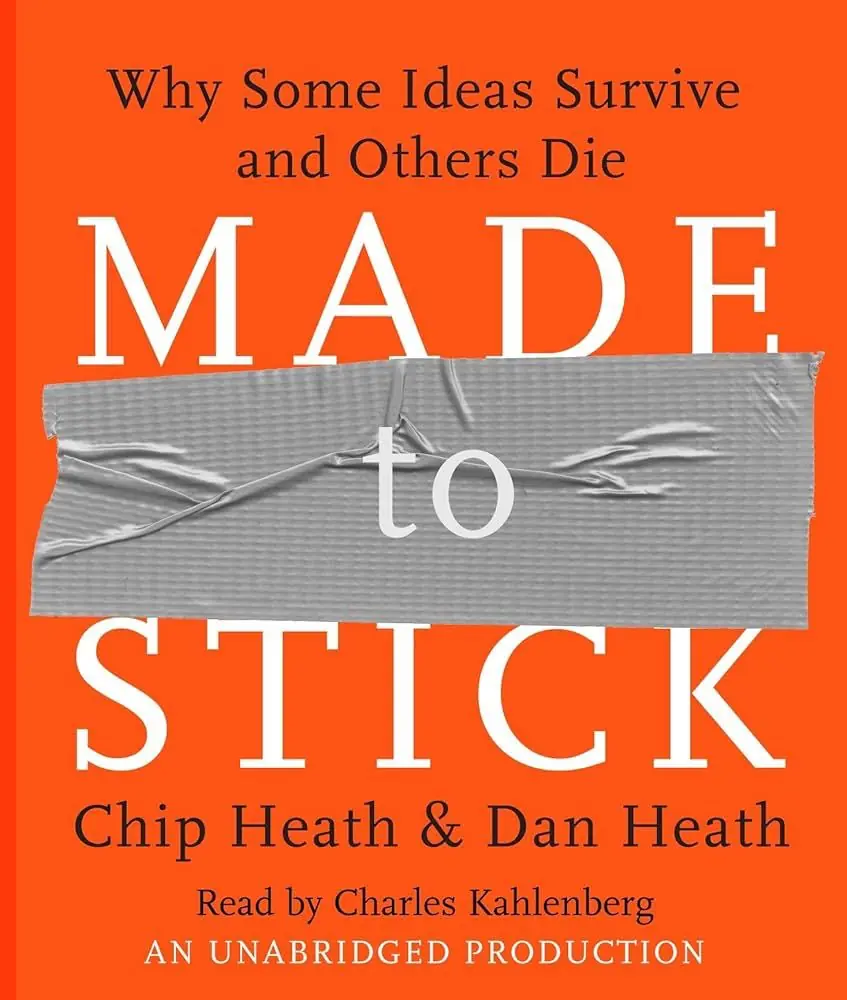
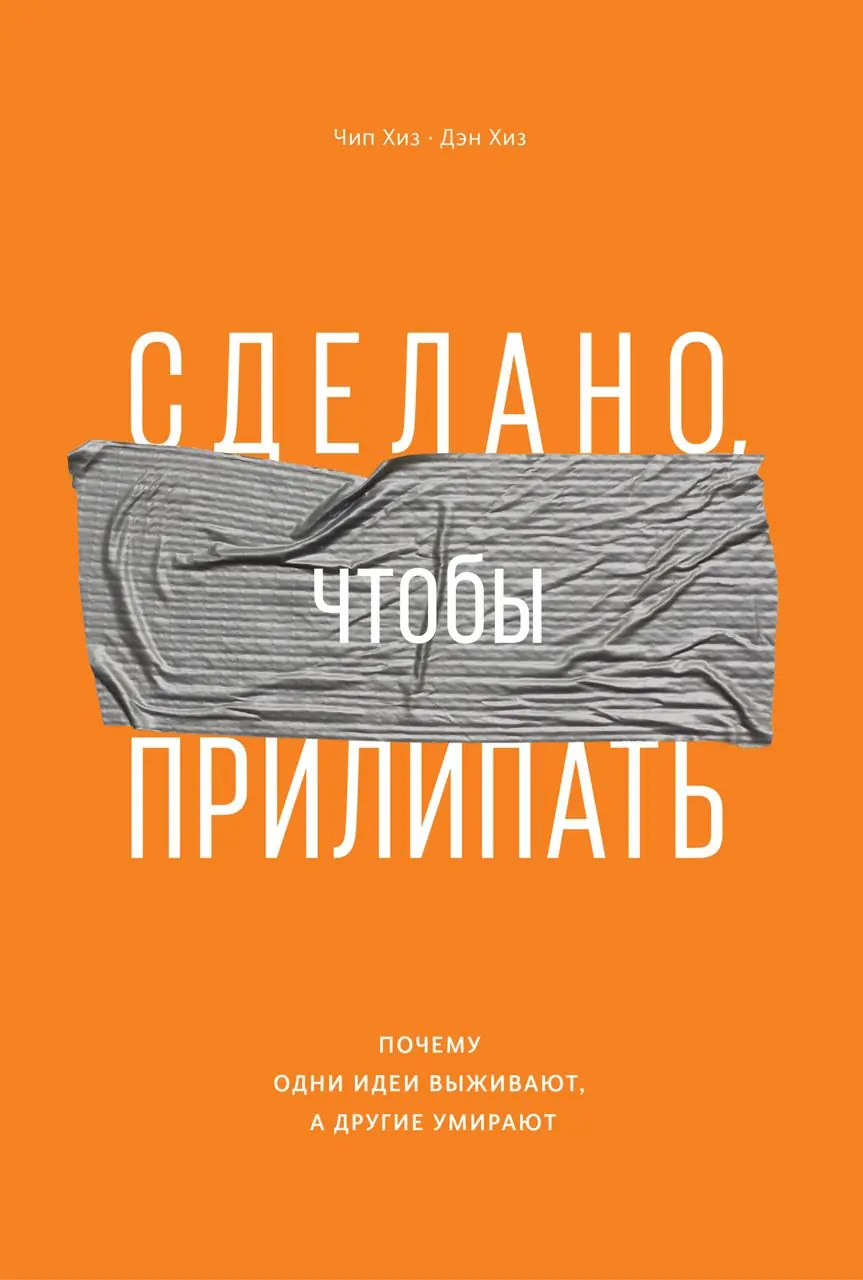
Made to stick. Why some ideas survive and others die (Made to Stick. Why Some Ideas Survive and Others Die)
In this book, the authors are fascinating about how to make your ideas sticky. This will allow your important ideas to make their way. The authors first talk about their acronym. SUCCESs:
- Simple. (simplicity) In order to expose the essence of the idea, you need to be able to weed out excess. To do this, you need to be able to define goals and priorities - ideas must be both brief and substantive. For example, these are proverbs that we easily remember and use on occasion.
- Unexpectedness (unexpected) To attract attention, it is important to surprise the audience with seeming illogicality. This is close to Suvorov's thesis "surprised - won":) But surprise does not last long, so it is important in addition to surprise to arouse the interest and curiosity of the audience.
- Specificity (concrete) Abstract ideas are poorly understood, so the authors recommend adding specific images that catch the audience.
- Credibility (credentialed) Sticky ideas should in themselves be credible and for this you can use external authorities, statistics, visualization, test recommendations (Try it yourself.):)
- Emotionality (emotional) Here, the authors suggest using emotions to reinforce their people. Plus, people have emotions for people rather than abstractions, so in a mix of concreteness, this item allows charities to fundraise successfully.
- Stories (story) This part is devoted to using stories that illustrate ideas well and, in combination with other factors, helps not only convey an idea, but also to pull off a kind of mental rehearsal, where the audience plays the story in their head.
Russian publisher (MYTH) lead The following list of reasons to read the book
- After reading this book, which is fascinating and provocative, you will have a different way of communicating your ideas to the world.
- Checklist, which will help turn an ordinary idea into a “sticky”
- The book has a Lab of Ideas where you can hone the theory in practice: imagine how to improve other people's stories, and think about what chips to add. Bestseller: almost a thousand reviews on Amazon and high rating — 6 a million examples, useful cases and 256 Pages that will inspire creative thinking feats
P.S. I liked the book. Written by scientists and teachers in cool universities Chip Heath teaches at Stanford University Graduate School of Business Dan Heath works as a leading specialist at the Duke University Center for Social Entrepreneurship Development. It’s not just a bubbly book, it has many references to specific psychological experiments, plus examples from the history of marketing:)
#Writing #PublicSpeaking #Leadership #SelfDevelopment #ProductManagement