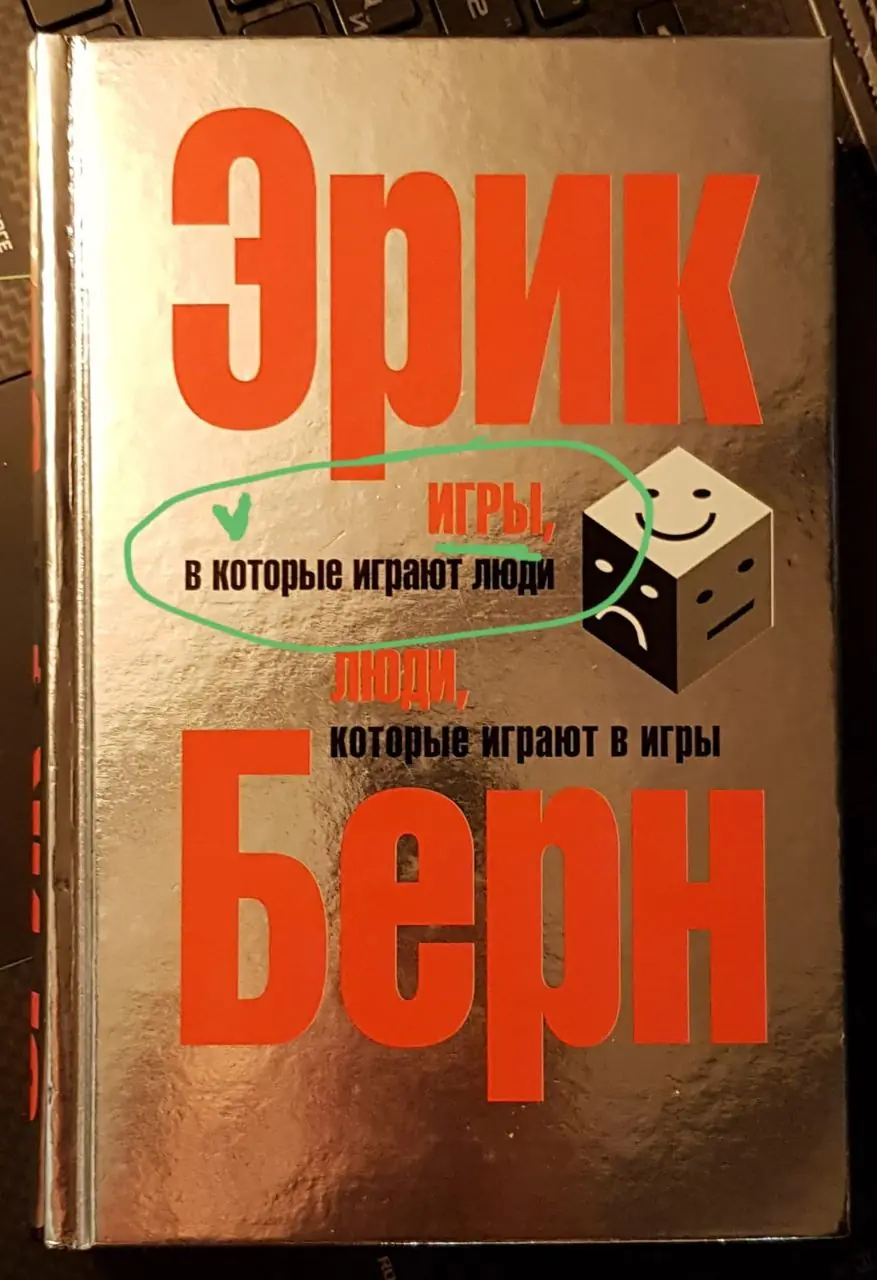
Today, I decided to recall Eric Berne’s classic book “Games People Play,” which I really liked on first reading:)
I love games since I was a kid. 7 I went to the chess section for years, played board games and once in computer games, but I ended up with them. Now briefly about the book itself and its author, who is one of the founders of transactional analysis. The book "Games ..." was written in the middle. 20 century, but still relevant:) In the beginning, the author mentions the 5 How to organize time within a group of people:
- ritual
- fun
- games
- closeness
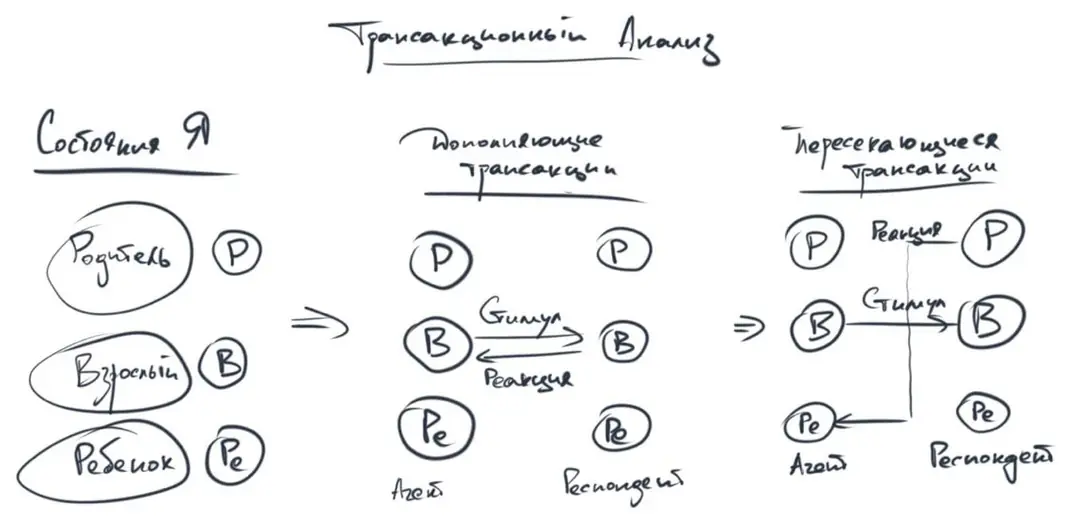
- activities that can serve as a basis for all The goal of each participant is to get as much satisfaction as possible from transactions with others. The most productive items 3 and 4And the fourth is rare. As a result, games are the most common. To analyze games, the author introduces structural analysis and breaks down the states of the ego into 3: parent, adult and child. Then he introduces transactional analysis, which analyzes transactions, units of social communication, and communication can go between different states of self. As a result, there are complementary transactions and overlapping (Look at the attached picture.). Taking into account the definitions introduced, the author considers what rituals and entertainments are, in which there are only complementary transactions. But the games are more interesting... In fact, they differ from rituals and entertainment in that they have ulterior motives and the presence of iggarish. I recommend you to read your own review of the structure of a typical game and then analyze such interesting and popular games from different categories: A lifelong group of games: "alcoholic," "debtor," "hit me," "caught you son of a bitch!", "look what I did because of you,"
- a group of marital games: "dumb", "court", "frigid woman", "chased housewife", "if it wasn't for you", "see how I tried", "dear"
- a group of games at parties: "What a horror!", "flaw", "flawed", "why don't you ... - Yes, but"
- group of sexual games: "Well, fight!", "perversion", "rape!", "stocking", "scandal"
- a group of games of the underworld: "cop and thieves", "how to get out of here", "we'll inflate Joe"
- groups of games in the therapist's office: "greenhouse", "I'm just trying to help you", "needy", "peasant", "psychiatry", "fool", "wooden leg"
- a group of good games: "work holiday", "cavalier", "pleased to help", "local sage", "they will be glad they knew me" In general, an interesting classification and very vital. Many of these games we see in life quite often. After reading the book, you will be able to understand how they work and try to stop participating in those games that cause you discomfort:)
#PopularScience #Psychology