Solving chess puzzles on Lichess (Category: SelfDevelopment)
Solving chess puzzles on Lichess (Rubric #SelfDevelopment)
More than thirty years ago, even before first grade, I started learning to play chess and continued to do it almost until high school. I didn’t make much progress, but chess helped me structure my thinking and learn tactics and strategies. I told you more about it in the post.How I Solve Difficult Problems or How I Came From Decisions in My Mind to Writing Culture" I dropped the chess on 20+ years, but last year I decided to remember them after studying in the program "Effective Thinking" with grandmaster Ernesto Inarkiev, about which I am told.
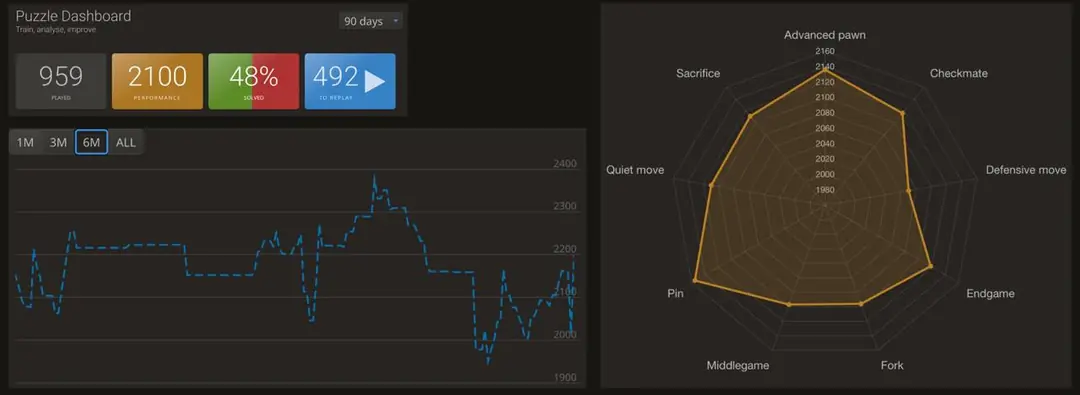
I didn’t play chess online more often, but I started solving puzzles on Lichess and watching my progress. This approach reminded me of My leetcode classesSo I decided to share the statistics for the last six months. By the way, I noticed that my instantaneous rating in solving puzzles fluctuates around the area. 2150-2200But it depends a lot on the state in which I solve the problems. If I do it during an illness or in the evening after a difficult day, the rating drops to the bottom. 2000 And I feel like the throttling starts in my head.
- If I'm doing it in prime time with great health and I'm not distracted, then I can knock out and 2300+ If I do not bring myself to extremes, then the rating fluctuates in the area. 2150-2200 But the average rating is not subject to such fluctuations and is somewhere in the area. 2100 As you can see from the web, where you can see the results by category: mats, mittelspiel, endgame, forks, victims, ...
So, when I was a kid, I was also solving puzzles like this, but they were printed in books called chess solvers, and there were puzzles like "Matt Mat." 2 move:) Things have become much more comfortable now.
#SelfDevelopment #Chess #Brain #Leadership #SystemThinking #Thinking